Supporting young people in their communities... a 27 year Journey
For more than two decades, School Focused Youth Services (funded by the Victorian State Government), has been a cornerstone of BATForce’s work with young people, families, schools and community partners across the Barwon region.
Through SFYS, BATForce, schools and community organisations worked together to provide prevention and early-intervention responses that supported at-risk young people’s learning, development, health and wellbeing. The goal was always clear — to reduce risk factors, strengthen protective factors, and keep young people connected to education.
How did BATForce do this?
BATForce’s SFYS Coordinators worked side-by-side with school wellbeing teams, leadership staff and community agencies to:
- Identify emerging and ongoing needs for at-risk students
- Design targeted, school-based or cluster-based responses
- Support implementation, reporting and evaluation
- Build trusted relationships between schools, families and services
Rather than operating in isolation, SFYS created shared responsibility for young people — linking education, health and community sectors in ways individual schools could not do alone.
Evidence-based and outcomes-focused
All SFYS work was grounded in evidence-based strategies and innovative practice. Programs were designed using both quantitative and qualitative data and included measurable outcomes that could be demonstrated and evaluated over time.
This approach ensured supports were:
- Responsive to real need
- Informed by data and lived experience
- Adaptable as issues evolved
- Accountable to schools, families and funders
SFYS reach
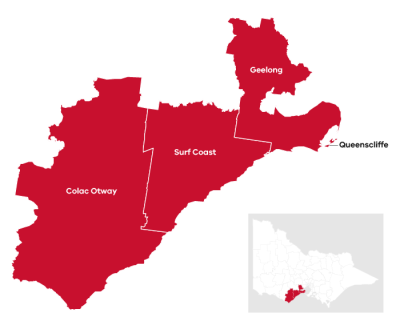
The BATForce SFYS program was funded by the Victorian State Government and delivered across Wadawurrung, Gulidjan and Gadubanud Countries, including:
- Geelong
- Surf Coast
- Bellarine Peninsula
- Colac-Otway
- Borough of Queenscliffe
Priority Primary and Secondary government and non-government schools were eligible to access SFYS support.
BATForce proudly held the SFYS contract from 1998 until its defunding in 2025, delivering sustained impact across generations of young people.
What did SFYS programs look like?
There was no single “off-the-shelf” model. Over the years, BATForce developed hundreds of tailored programs, shaped around each school community’s needs — as long as they met SFYS guidelines.
Schools could:
- Co-design a bespoke program with BATForce, or
- Purchase and adapt a pre-existing evidence-based program
Programs commonly focused on:
- Engagement and attendance
- Wellbeing and emotional regulation
- Family-school relationships
- Transitions (primary to secondary, re-engagement pathways)
- Risk-taking behaviours and early intervention
Here are some examples of our recent programs:
Why SFYS mattered
Since 1998, SFYS helped vulnerable students stay connected to education by:
- Coordinating early intervention for students at risk
- Building trusted, long-term relationships with families and schools
- Enabling cross-sector collaboration that schools cannot achieve alone
- Maintaining a coordinated, statewide safety net for at-risk students
- Preserving local expertise and deep community knowledge
- Prioritising vulnerable students’ right to remain engaged in education
What this means for the future?
While SFYS funding has ended, the capability, experience and approach remain.
BATForce continues to work alongside schools, communities and partners to design and deliver:
- Early-intervention programs
- Co-designed wellbeing initiatives
- Place-based, evidence-informed responses
- Practical supports that keep young people connected
If you’d like to talk about what this type of work could look like for your school or community, get in touch for a conversation.
Between 2021 and 2025, BATForce delivered the following outcomes through the SFYS contract:
This data captures just the final chapter of a 27-year commitment to early intervention via SFYS funding. The true impact spans 27 years of work alongside young people, families and schools.
A snapshot of four years can’t capture the impact of 27 years.
